Quai (QUAI): what it is and how to mine it with a Bitcoin miner
Quai (QUAI) is a standalone proof-of-work blockchain that, since December 2025, can also be mined with Bitcoin SHA-256 ASIC miners. The miner connects to a pool that supports Quai and is paid in QUAI coins – instead of Bitcoin, not on top of it. Today 1 TH/s on Quai earns approximately 0,85 Kč a day, compared with 0,69 Kč on Bitcoin.
Summary
- The Quai mainnet has been running since February 2025. Originally it was mined only with graphics cards (KawPoW); the SOAP protocol added SHA-256 and Scrypt.
- A SHA-256 miner submits so-called workshares to Quai and receives QUAI for them. The reward for the Bitcoin Cash block on which the work is based goes to the protocol to buy back and burn QUAI.
- According to our calculation as of 9 November 2026, Quai pays about 23% more per 1 TH/s than Bitcoin. However, the difference rests mainly on the QUAI price, which is very low and volatile.
- You need neither a new miner nor new firmware. Simply change the pool address and enter a Quai wallet address (starting with 0x).
- Risks: the network's short history, the coin's low liquidity and reward rules that may keep changing.
What is Quai Network
Quai Network is a blockchain with its own coin, QUAI, built on proof of work, i.e. on mining. It is developed by the US company Dominant Strategies, and the project grew out of research from 2018. According to the official website, the mainnet launched on 4 February 2025.
The network is not a single chain but a hierarchy: one Prime chain coordinates the Region chains, and below them run the Zone chains, where transactions are processed. According to Kryptex Pool, the planned structure is 1 Prime, 3 Region and 9 Zone chains. At launch the Cyprus-1 zone was active, and further zones are to be added as demand grows. The Zone chains run an Ethereum-compatible virtual machine, so standard Solidity smart contracts work there.
Quai has two coins. QUAI is the main coin with decreasing issuance and smart contract support. Qi is the second token, whose issuance is governed by mining difficulty. The two can be converted within the protocol. For SHA-256 miners only QUAI matters – that is what pools pay out in.
How Quai is mined: KawPoW, SHA-256 and Scrypt
| Parameter | Quai (QUAI) |
|---|---|
| Algorithms | KawPoW (GPU), SHA-256 and Scrypt (ASIC via SOAP) |
| Consensus | Proof of Entropy Minima (PoEM) |
| Block time | Zone approx. 10 s, Region approx. 5 min, Prime approx. 15 min (according to Kryptex Pool) |
| Maximum supply | unlimited, with logarithmically decreasing issuance |
| Wallet address | Ethereum format, starts with 0x |
| Hashrate unit (SHA-256) | TH/s |
| Price | 0,16 Kč per 1 QUAI |
Quai blocks are produced by graphics cards running the KawPoW algorithm. SHA-256 and Scrypt ASIC miners join the network differently – via the SOAP protocol (Subsidized Open-market Acquisition Protocol). It was launched on the mainnet in December 2025.
How it works in practice:
- The pool prepares a job for the miner that is at the same time a candidate Bitcoin Cash block. However, the reward for this block is not sent to the miner but to an address controlled by the Quai protocol.
- The miner hashes exactly as it does for Bitcoin. Results that meet the lower Quai difficulty are submitted by the pool as workshares.
- KawPoW blocks can include at most 9 workshares. For each workshare counted, the protocol pays a reward in QUAI from regular issuance.
- If the work happens to produce a valid Bitcoin Cash block, the BCH reward goes to the protocol, which uses it to buy QUAI on the market and burn it.
For you as a miner this means one simple thing: you receive only QUAI. You get no Bitcoin or Bitcoin Cash on top. So this is not classic merged mining as with Fractal Bitcoin, where the BTC earnings remain and the bonus comes on top.
What Quai earns a Bitcoin miner today
We compared mining Quai and Bitcoin on two machines from our range. Earnings are calculated from data that we recalculate on the website every hour, as of 9 November 2026. For electricity we use the cheapest location of our hosting (1,14 Kč/kWh) and, for comparison, 4 Kč/kWh, which corresponds to a typical household price in the Czech Republic.
| Miner | Hashrate / power draw | Quai / day | Bitcoin / day | Electricity / day at 1.14 Kč/kWh | Electricity / day at 4 Kč/kWh |
|---|---|---|---|---|---|
| Antminer S23 | 318 TH/s / 3,498 W | approx. 271 Kč | approx. 221 Kč | approx. 96 Kč | approx. 336 Kč |
| Antminer S21 Pro | 245 TH/s / 3,675 W | approx. 209 Kč | approx. 170 Kč | approx. 101 Kč | approx. 353 Kč |
What the table shows:
- Today Quai pays roughly 23% more per 1 TH/s than Bitcoin. For the Antminer S23 that is a difference of about 50 Kč a day before the pool fee (1% at 2Miners).
- The advantage is fragile. Earnings in koruna depend on the QUAI price, which as of 9 November 2026 is around USD 0.007. A drop of roughly a fifth is enough for the advantage over Bitcoin to disappear. The reverse also applies.
- Neither pays off at home. At 4 Kč/kWh the electricity costs more than the machine mines in either QUAI or BTC.
The calculation is for guidance only and is not a promise of earnings. The Quai project itself claims that mining via SOAP will be more profitable than mining BTC or BCH – but that is the project's claim, not a guarantee. Current figures for specific machines can be found on the ASIC miner profitability page, and network hashrate and difficulty on the Mining statistics page.
Which miner to mine Quai with
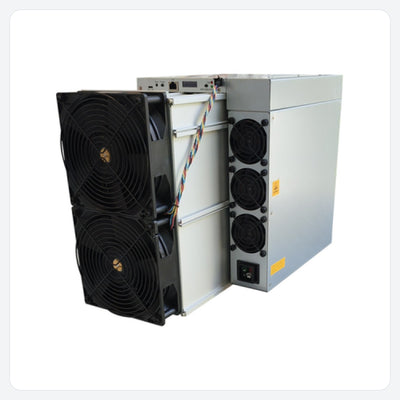
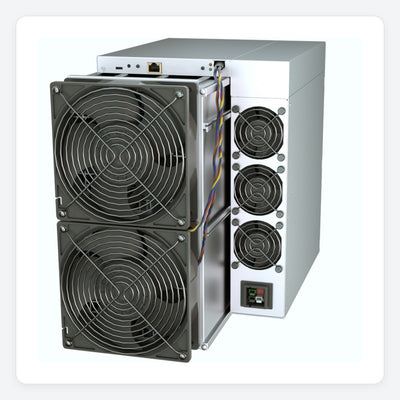
Quai can be mined with any SHA-256 ASIC miner – Antminer, Whatsminer, Avalon and others. According to the pools, you do not need to change the firmware, because communication runs over standard Stratum v1. Choosing a machine therefore follows the same rules as for Bitcoin: what matters is efficiency in J/TH and the electricity price.
In practice this means that for owners of a SHA-256 miner, Quai is another coin the machine can switch to, much like Bitcoin Cash or eCash. Buying a special machine for Quai makes no sense. An overview of models can be found in the Bitcoin miners (SHA-256) collection, and a comparison of other coins on the same algorithm in the article SHA-256 coins.
We have not tested small home miners such as the Bitaxe on Quai. Quai pools set a high minimum share difficulty, so a machine with around 1 TH/s would submit shares only rarely.
Pools and wallets
Pool
The official Quai documentation lists, among others, the StratumX, Kryptex, 2Miners, Mining Dutch, PowerPool and HIMPOOL pools for SHA-256. For example, since April 2026 2Miners has listed:
- the address
stratum+tcp://quaisha.2miners.com:8080(Europe), passwordx, - your Quai wallet address as the user, optionally with the machine name,
- PPLNS payouts with a 1% fee, a minimum of 50 QUAI and payouts every 2 hours.
The differences between payout methods are explained in the article PPS, PPLNS and FPPS. How to change the pool in your miner is described in the guide How to connect an ASIC miner. If your machine is in our hosting, please discuss the pool change with us in advance.
Wallet
You can create a QUAI address, for example, in the Pelagus browser extension or in the Tangem hardware wallet, both recommended by the Quai documentation. Some exchanges accept QUAI deposits directly; 2Miners names MEXC, Gate.io, LBank and Kraken. Caution: a Quai address looks exactly like an Ethereum address. Before mining to an exchange address, check that the exchange accepts QUAI on the Quai mainnet.
Risks of mining Quai
- Price and liquidity: QUAI is a cheap coin with low trading volume. Larger amounts are harder to sell, and earnings in koruna can change quickly.
- Lost BTC earnings: while mining Quai you mine no Bitcoin at all. If the QUAI price falls, mining loses out against BTC.
- Young network and young protocol: the mainnet has been running for less than two years, SOAP for less than one. The reward rules and their split between algorithms may change.
- Limited number of shares: a block can hold at most 9 workshares. The more SHA-256 and Scrypt hashrate flows into Quai, the smaller the share per 1 TH/s.
- Unlimited supply: QUAI has no fixed cap like Bitcoin. Issuance decreases but never ends.
What next
- Bitcoin miners (SHA-256) – machines that mine both Bitcoin and Quai, with an earnings calculator.
- ASIC miner profitability – current BTC and QUAI earnings per 1 TH/s, recalculated every hour.
- Miner hosting – run your machine in our data centre with cheaper electricity.
Sources
- Quai Network: Project SOAP launches on Quai mainnet (18 December 2025)
- Quai Docs: SOAP – workshares, AuxPoW, QUAI buyback and burn
- Quai Docs: SHA & Scrypt Mining (pools, wallets)
- Quai Network: About (mainnet launch, PoEM, QUAI and Qi)
- 2Miners: How to Mine Quai – SHA256 and KawPow pools (28 April 2026)
- Kryptex Pool: Quai Network (chain structure, block times, issuance)
- The Block (Quai press release): SOAP and the BCH, LTC, DOGE parent chains
Frequently asked questions
Do I lose my Bitcoin earnings by mining Quai?
Is it worth mining Quai instead of Bitcoin?
Do I need a different miner or firmware for Quai?
What wallet do I need for QUAI?
What is the SOAP protocol?
This text was prepared with the help of AI. Facts, figures and procedures were checked by Yegor.