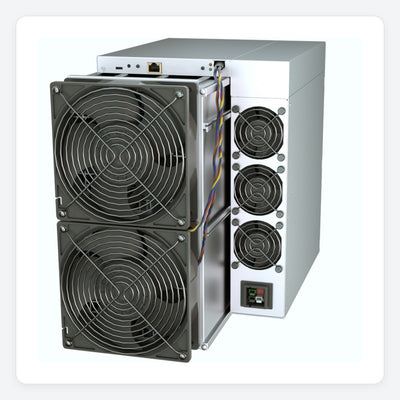
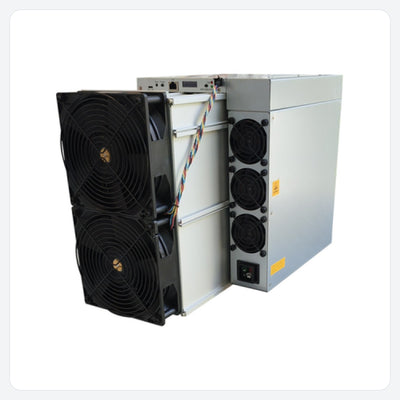
DigiByte (DGB): what it is and how to mine it with a Bitcoin miner
DigiByte (DGB) is a cryptocurrency launched in 2014 that is mined by five different algorithms at once – and one of them is SHA-256, the same as Bitcoin. Any Bitcoin ASIC miner can therefore mine DGB instead of BTC – all you need to change is the pool and the payout address. Today, however, you get roughly a third less than on Bitcoin: 1 TH/s earns 0,52 Kč a day on DGB and 0,78 Kč on BTC.
Summary
- DigiByte has five mining algorithms: SHA-256, Scrypt, Skein, Qubit and Odocrypt. Each finds roughly 20% of blocks, and the network as a whole produces a block every 15 seconds.
- The maximum supply is 21 billion DGB. There is no halving – the block reward decreases smoothly by roughly 1% every month.
- On SHA-256, DGB has a small network (about 32 PH/s as of 5 Nov 2026). Even a single home miner can realistically find a whole block solo.
- Earnings per TH/s are currently about 34% lower than on Bitcoin. DGB makes sense for solo mining with small miners or as a supplement, not as the main source of income.
- Since July 2026, DigiDollar has been running on the network – a stablecoin backed by locked DGB. For miners, it mainly meant a mandatory software update.
What is DigiByte
DigiByte is a public blockchain built on Bitcoin's code. The mainnet has been running since January 2014 and, according to the project, had a premine of only 0.5%. It focuses on fast, cheap transfers and on decentralised mining.
The main difference from Bitcoin lies in how it is mined. Instead of one algorithm, DigiByte uses five, each with its own difficulty. The idea is simple: when several types of hardware share the blocks, no single manufacturer or large farm should be able to control the whole network.
The DigiByte Core client software is based on Bitcoin Core. Version 8.26 from 2025 was rebuilt on Bitcoin Core 26 and introduced Taproot. The current production series is 9.26.x.
How DigiByte is mined: five algorithms in one network
The network as a whole produces a block every 15 seconds. Because blocks rotate between five algorithms, each of them gets a block on average once every 75 seconds – roughly 1,150 blocks a day per algorithm. The whole mining process is classic proof of work.
| Algorithm | Mined with | Who it is for |
|---|---|---|
| SHA-256 | Bitcoin ASIC miners (Antminer, Whatsminer, Avalon, Bitaxe…) | owners of BTC miners – the main topic of this article |
| Scrypt | ASIC miners for Litecoin and Dogecoin (e.g. Antminer L9) | hardly anyone in practice – LTC + DOGE earn more |
| Skein | graphics cards | GPU miners |
| Qubit | graphics cards | GPU miners |
| Odocrypt | graphics cards and FPGAs; the algorithm changes every 10 days | resistant to ASIC miners |
Block reward and issuance
The maximum supply is fixed at 21 billion DGB. DigiByte has no step-wise halving like Bitcoin. Instead, the reward decreases smoothly, by roughly 1% every month. As of 5 Nov 2026, a miner receives about 248 DGB per block, which at today's price of 0,067 Kč per coin is around 17 Kč.
According to available estimates, the last coin should be mined around 2035. After that, miners will receive only transaction fees.
How much a Bitcoin miner earns on DigiByte
Earnings are calculated the same way as for Bitcoin: machine hashrate × earnings per 1 TH/s per day. Today, 1 TH/s earns 0,52 Kč on DGB and 0,78 Kč on BTC. We recalculate the figures every hour based on difficulty and exchange rate.
The table shows our calculation for four machines from our range. Electricity on our hosting is calculated at 1.14 Kč/kWh (the cheapest available location, today 1,14 Kč), at home at 4.50 Kč/kWh.
| Miner | Hashrate / power draw | Gross DGB earnings per day | Gross BTC earnings per day | Electricity hosting / home | Solo DGB: 1 block on average every |
|---|---|---|---|---|---|
| Bitaxe Gamma 601 | 1.2 TH/s / 17 W | 0.62 Kč | 0.94 Kč | – / 1.8 Kč | about 23 days |
| NerdOctaxe Gamma | 12 TH/s / 200 W | 6.20 Kč | 9.35 Kč | – / 21.6 Kč | about 2.3 days |
| Antminer S21 Pro | 245 TH/s / 3,675 W | 127 Kč | 191 Kč | 100 Kč / 397 Kč | about 9 blocks a day |
| Antminer S23 | 318 TH/s / 3,498 W | 164 Kč | 248 Kč | 96 Kč / 378 Kč | about 11 blocks a day |
Calculated as of 5 Nov 2026 with a DGB SHA-256 network hashrate of about 32 PH/s, excluding pool fees. We do not place small miners in hosting, so no hosting price is given for them. Earnings change with the exchange rate and difficulty – treat the table as an illustration, not a promise.
What the table shows
- Bitcoin leads on earnings. The same machine earns roughly half as much again on BTC as on DGB, with the same power consumption.
- At home, a large machine does not pay off on either coin. At 4.50 Kč/kWh, the Antminer S21 Pro would make a loss even on Bitcoin.
- Solo mining on DGB is realistic. A Bitaxe finds a DGB block on average once every three weeks; on Bitcoin it would statistically wait thousands of years. A block is worth only around 17 Kč, though – it is about the joy of finding a block, not about making money.
We describe how solo mining with small miners works in the article Bitaxe, NerdQaxe or Avalon Nano.
What about Scrypt miners?
Litecoin and Dogecoin miners can mine DGB via the Scrypt algorithm. It is not worthwhile, though. On LTC and DOGE, both coins are mined at the same time (merged mining), whereas DGB is a separate coin.
As of 5 Nov 2026, 1 GH/s earns about 1.4 Kč a day on DGB-Scrypt. An Antminer L9 with 16 GH/s would therefore mine around 23 Kč a day – several times more on LTC + DOGE. We therefore do not recommend DGB for Scrypt miners.
How to start mining DigiByte with a Bitcoin miner
- Create a DGB wallet and copy the address. DigiByte addresses start with dgb1, D or S – a Bitcoin address will not work.
- Choose a pool that supports DigiByte on SHA-256 (for example Kryptex Pool), or a solo pool. Make sure it is DGB-SHA256 and not another DigiByte algorithm.
- In the miner's web interface (AxeOS on the Bitaxe, the Miner Configuration tab on the Antminer), enter the pool address and port.
- As the user, enter your DGB address or pool account, optionally followed by a dot and the machine name.
- Save the settings and after 10–15 minutes check on the pool's page that the miner is submitting work.
You do not need to change the miner's firmware or frequency. At any given moment the machine mines only one coin – either BTC or DGB. The connection procedure in general is explained in the guide How to connect an ASIC miner, and the differences in pool payouts in the article PPS, PPLNS and FPPS.
Pools and wallets
The official wallet is DigiByte Core (a full node for Windows, macOS and Linux) from digibyte.org. DGB is also supported by many multi-currency wallets. Before your first payout, always check that the wallet really accepts the dgb1 address format.
For solo mining with your own node, you need a synchronised DigiByte Core and a stratum server. To get started, a public pool or a solo pool offering DGB-SHA256 is simpler.
Selling is limited: DGB trades on fewer exchanges than Bitcoin, including Binance. Check the daily volume and spread before you start mining with more hashrate.
DigiDollar: what changed in 2026
In July 2026, miners activated the DigiDollar protocol by signalling (BIP9) at block 23,869,440. It is a stablecoin pegged to the US dollar, which a user creates by temporarily locking DGB as collateral – without an intermediary and directly on the DigiByte blockchain.
According to the developers, the freeze on issuing DigiDollars ended at block 24,490,000 (2 Nov 2026). All node operators, pools and miners had to update to DigiByte Core 9.26.6 or newer beforehand.
DigiDollar has no effect on the block reward or on the earnings calculation. For miners, the main thing is that their pool runs on the current version.
Risks you should know about
- Small network on SHA-256. About 32 PH/s is a fraction of Bitcoin's hashrate. A single large Bitcoin farm could easily hold the majority of this algorithm's hashrate. Five algorithms are meant to make such an attack harder, but they do not rule it out completely.
- Low price and liquidity. The price of DGB is in hundredths of a koruna. With a larger volume of mined coins, selling may be slow or at a worse rate.
- Declining reward. The reward falls by roughly 1% every month. Without a rise in price, earnings per TH/s slowly decline.
- New features. DigiDollar has only been on the mainnet since July 2026 and relies on price oracles. Its long-term operation has not yet been proven.
We continuously track network hashrate, difficulty and pool distribution on the Mining statistics page.
Who DigiByte makes sense for
- Owners of small miners (Bitaxe, NerdQaxe) who want to find a whole block. On DGB this happens regularly, on Bitcoin only rarely.
- Miners who want to diversify the coins they mine. Part of the hashrate on DGB, most of it on BTC.
- Not suitable for those looking for the highest earnings. On SHA-256, that is currently Bitcoin – and the machine can be switched between coins at any time.
An overview of other coins on the same algorithm can be found in the article SHA-256 coins.
What next
- Bitcoin miners (SHA-256) – all machines that mine both Bitcoin and DigiByte.
- ASIC miner profitability – current earnings and payback of specific models, recalculated every hour.
- ASIC miner hosting – running large machines on cheap electricity in our data centre.
Sources
- DigiByte.org – network parameters, issuance, DigiByte Core versions, DigiDollar
- Kryptex Pool – DigiByte: five algorithms and hardware
- Kryptex Pool – DGB SHA-256 statistics (5 Nov 2026)
- WhatToMine – DGB Scrypt (5 Nov 2026)
- TradingView / CoinMarketCal – DigiDollar activation (17 Jul 2026)
- The Industry Spread – DigiDollar Thaw Day, block 24,490,000
Frequently asked questions
Can I mine DigiByte with a Bitcoin miner?
Is mining DigiByte more profitable than Bitcoin?
Will a Bitaxe find a block on DigiByte?
Does DigiByte have a halving?
What address do I need for DGB payouts?
This text was prepared with the help of AI. Facts, figures and procedures were checked by Yegor.