What is Bitcoin: how it works, its history and how to get it

Bitcoin (BTC) is the first and largest cryptocurrency – digital money that is not issued by any bank or state. It has been running since 3 January 2009 as an open network of thousands of computers that together keep a public ledger called the blockchain. There will never be more than 21 million bitcoins, and new ones are created through mining: ASIC miners around the world “pay” for them with electricity and computing power.
Summary
- Bitcoin was invented by the anonymous Satoshi Nakamoto. He published a description of the system on 31 Oct 2008 and launched the network on 3 Jan 2009.
- The total supply is fixed: 21 million BTC. As of October 2026, roughly 20.1 million have been mined.
- A new block is created on average every 10 minutes. The miner's reward has been 3.125 BTC since April 2024 and will halve around April 2028.
- You can buy Bitcoin on an exchange or at a bitcoin ATM, accept it as payment, or mine it with your own ASIC miner.
- The price is highly volatile. Bitcoin is a long-term, risky asset, not a safe place for money you will need tomorrow.
What Bitcoin is and how it differs from ordinary money
The koruna in your account is a record in your bank's database. The bank can delay a payment or freeze your account, and the central bank can “print” more money. Bitcoin is a record in a shared database held by every full node in the network. Nobody can rewrite it on their own or issue new coins outside the rules the network has agreed on.
That is why you can send bitcoin to anyone in the world, day or night, without an intermediary's permission. But the reverse also applies: if you lose access to your keys or send coins to the wrong address, there is no one to complain to.
| Parameter | Value |
|---|---|
| Ticker | BTC |
| Network launch | 3 Jan 2009 (genesis block) |
| Consensus | proof of work |
| Mining algorithm | SHA-256 |
| Average block time | 10 minutes |
| Difficulty adjustment | every 2,016 blocks (roughly 2 weeks) |
| Block reward | 3.125 BTC (since 20 Apr 2024) |
| Maximum supply | 21,000,000 BTC |
| Smallest unit | 1 satoshi = 0.000 000 01 BTC |
| Network hashrate | around 1,100 EH/s (as of 15 Oct 2026) |
| Price | 1 767 033 Kč |
How Bitcoin works
Bitcoins “sit” at an address for which you hold the private key. When you pay, your wallet signs the transaction with this key and sends it to the network. Nodes verify the signature and that the same coins have not already been spent by someone else.
Miners then group pending transactions into a block. A block is only valid if its fingerprint (SHA-256 hash) comes out below the target value – and that takes trillions of attempts. Whoever finds a suitable hash first attaches the block after the previous one and receives the reward. Blocks link together like links in a chain, hence the name blockchain.
After six confirmations, i.e. roughly an hour, a payment is considered practically irreversible. Anyone wanting to change an old transaction would have to recompute all subsequent blocks faster than the rest of the network. At today's hashrate of around 1,100 EH/s, that is not realistic.
For small and instant payments there is the Lightning Network – a second layer on top of Bitcoin. Payments take seconds and fees are fractions of a koruna, but it is better suited to spending than to long-term savings.
A short history of Bitcoin
| Year | What happened |
|---|---|
| 2008 | Satoshi Nakamoto publishes the paper “Bitcoin: A Peer-to-Peer Electronic Cash System”. |
| 2009 | The first block is created on 3 January, the first transaction on 12 January (Satoshi sends 10 BTC to Hal Finney). |
| 2010 | On 22 May, the first known purchase of goods: 10,000 BTC for two pizzas. |
| 2012 | The first halving – the block reward falls from 50 to 25 BTC. |
| 2017 | SegWit is activated. A dispute over block size leads to the split of Bitcoin Cash on 1 August. |
| 2021 | The Taproot upgrade. El Salvador recognises Bitcoin as legal tender. |
| 2024 | Spot bitcoin ETFs start trading in the USA. On 20 April, the fourth halving to 3.125 BTC. |
| 2028 | The next halving to 1.5625 BTC (estimate: April). |
Who is Satoshi Nakamoto
To this day, nobody knows. Satoshi communicated only by e-mail and through internet forums, and withdrew from the project at the end of 2010. It is estimated that in the early years he mined around a million BTC, which have never moved.
There are plenty of theories, none confirmed. Australian Craig Wright claimed for years that he was Satoshi – in March 2024 a British court ruled that he is not. For the network's operation, though, it doesn't matter: Bitcoin has no boss who could be locked up, bribed or persuaded. We look at the myths and conspiracy theories around Satoshi in our video (in Czech).
How Bitcoin is mined
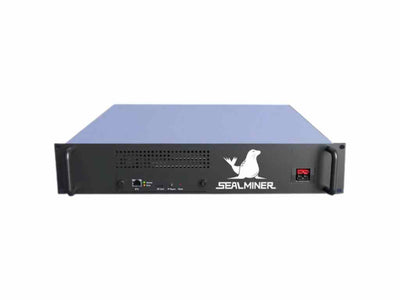
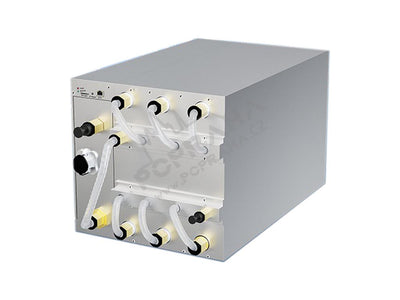
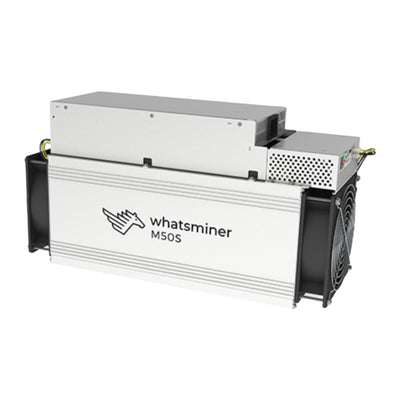
Today Bitcoin is mined exclusively by specialised ASIC miners – computers that can do nothing but compute SHA-256, but extremely fast. Mining on a graphics card or a laptop does not pay off. Miners join forces in pools, which split the reward according to the work done.
We calculate earnings per 1 TH/s of hashrate. Today it is approximately 0,84 Kč a day gross (we recalculate every hour based on difficulty and the exchange rate). An Antminer S21++ with 235 TH/s therefore mines about CZK 197 a day, but uses over 90 kWh of electricity. Profit therefore depends mainly on the electricity price. You will find the full calculation, machines and hosting in our article Bitcoin mining: does it pay off today?
How to get Bitcoin
| Method | For whom | What to watch out for |
|---|---|---|
| Crypto exchange or exchange office | regular purchases, larger amounts | identity verification, fees; move the BTC you buy to your own wallet |
| Bitcoin ATM | quick purchase or sale for cash | the rate is usually worse than on an exchange; never send money “on the instructions” of a stranger |
| Mining | those with cheap electricity or who use hosting | upfront investment in an ASIC; payback changes with the exchange rate and difficulty |
| Payment for goods or services | businesses and the self-employed | accounting, taxes and exchange-rate fluctuations |
At PC Praha you can buy and sell Bitcoin through a bitcoin ATM – we describe how it works in our article Bitcoin ATM at PC Praha. We also accept cryptocurrency payments for miners and services.
How to store Bitcoin safely
- Whoever holds the keys holds the bitcoins. On an exchange you only own a claim against the exchange. Keep larger amounts in your own wallet.
- A hardware wallet (e.g. Trezor from the Prague-based company SatoshiLabs, or Ledger) keeps your keys off your computer and is suitable for long-term savings.
- The recovery phrase (12 or 24 words) belongs on paper or a metal plate, not in a photo, e-mail or the cloud. Nobody legitimate will ever ask for it.
- Scams most often pose as a “new wallet version” or a “guaranteed return”. Only download wallet software from the manufacturer's official website.
Risks and common myths
Price volatility. Bitcoin has already lost most of its value several times (most recently in 2018 and 2022) and then returned to new highs. Nobody can guarantee this will happen again. Only invest money you can do without.
“Bitcoin is anonymous.” It is not – it is pseudonymous. All transactions are public, and specialised firms can link addresses to exchanges and specific people.
“Bitcoin can be banned or switched off.” Individual states can restrict exchanges or mining, but nobody can centrally switch off the network itself – it runs on nodes all over the world.
Taxes. In the Czech Republic, selling bitcoin is governed by the tax rules for cryptocurrencies (you will find an overview in our article Mining in the Czech Republic: taxes and law). Before you start selling or mining on a larger scale, check the current position with a tax adviser.
What next
- Bitcoin mining in practice – what an ASIC miner earns today, what electricity costs and when hosting pays off.
- SHA-256 coins – what else can be mined with the same machine as Bitcoin, and with what earnings.
- Bitcoin miners – our current range of SHA-256 machines with earnings calculations.
Sources
Frequently asked questions
How many bitcoins are left to mine?
Do I have to buy a whole bitcoin?
How fast does a bitcoin payment arrive?
Is it safe to leave bitcoins on an exchange?
Is it worth mining bitcoin at home?
This text was prepared with the help of AI. Facts, figures and procedures were checked by Yegor.