Bitcoin Cash (BCH): what it is and how to mine it

Bitcoin Cash (BCH) is an offshoot of Bitcoin, created on 1 August 2017 so that the network could handle more cheap payments directly on the blockchain. It uses the same SHA-256 algorithm, so it is mined by the same ASIC miners as Bitcoin – you just change the pool. Today 1 TH/s of hashrate earns about 0,81 Kč a day, almost the same as Bitcoin.
Summary
- BCH arose from a dispute over block size. It has bigger blocks and very low fees.
- Its issuance rules are the same as Bitcoin's: 21 million coins, 10-minute blocks, and since April 2024 a reward of 3.125 BCH.
- The network hashrate is around 3 EH/s, i.e. about 0.3% of Bitcoin's.
- It can be mined with any SHA-256 ASIC miner. You can switch between BTC and BCH, but not mine both at once.
What Bitcoin Cash is and how it came about
In 2015–2017 the Bitcoin community argued about how to speed up the network. Blocks had a 1 MB limit, and when the network was congested, fees rose sharply. One side pushed through SegWit and off-chain payments (today's Lightning Network). The other simply wanted bigger blocks. The result was a network split: from block 478,559 Bitcoin Cash has run independently.
Anyone who held bitcoins at the moment of the split suddenly also had the same number of BCH. The history of both networks up to block 478,558 is shared.
Since then Bitcoin Cash has itself split twice. In November 2018 Bitcoin SV broke away, wanting even bigger blocks. In November 2020 eCash broke away over a dispute about a mandatory share of the reward for development.
What has changed in the network since 2017
- Block size: 8 MB at launch, 32 MB since 2018. Since 15 May 2024 the limit adapts itself to network load.
- Difficulty: unlike Bitcoin, since November 2017 it has been adjusted after every block. The network thus reacts faster to large miners arriving and leaving.
- CashTokens (15 May 2023): tokens and NFTs directly on the BCH blockchain.
- Smart contracts (2025): an upgrade with higher script limits and precise big-number arithmetic.
Network upgrades take place regularly on 15 May. They only affect miners in that the pool must run an up-to-date node – you change nothing on the miner itself.
| Parameter | Bitcoin Cash |
|---|---|
| Ticker | BCH |
| Created | 1 August 2017 (split from Bitcoin) |
| Algorithm | SHA-256, proof of work |
| Target block time | 10 minutes |
| Difficulty adjustment | after every block |
| Block reward | 3.125 BCH (since April 2024) |
| Maximum supply | 21,000,000 BCH |
| Address format | bitcoincash:q… (CashAddr) |
| Network hashrate | around 3 EH/s (as of 18 October 2026) |
| Price | 5 968 Kč |
How Bitcoin Cash is mined
Mining BCH works the same way as Bitcoin: the miner searches for a block hash below the target value and the pool shares the reward among participants. The only difference is the size of the network. Bitcoin today has around 1,100 EH/s, Bitcoin Cash around 3 EH/s.
The halving came to Bitcoin Cash on the night of 3–4 April 2024 at block 840,000, roughly two weeks before Bitcoin's. The reward fell from 6.25 to 3.125 BCH. BCH's next halving is also due around 2028. What the halving means for earnings is described in the article Bitcoin halving.
Difficulty is recalculated after every block, so it reacts to changes in hashrate faster than Bitcoin's. But because BCH is also mined by miners who switch depending on profitability, the average block time fluctuates – in October 2026 it came to around 11 minutes.
How much mining BCH earns today
At today's difficulty and exchange rate, 1 TH/s on Bitcoin Cash earns approximately 0,81 Kč a day, on Bitcoin 0,84 Kč. For specific machines it works out like this (as of 18 October 2026, gross, without electricity):
| Machine | Hashrate | Power | BCH per day | BTC per day |
|---|---|---|---|---|
| Antminer S23 Hyd | 563 TH/s | 5,349 W | CZK 456 | CZK 473 |
| Antminer S21++ | 235 TH/s | 3,760 W | CZK 190 | CZK 197 |
| Canaan Avalon Q | 90 TH/s | 1,674 W | CZK 73 | CZK 76 |
Electricity consumption is the same for both coins, so the price per kilowatt-hour decides the profit. The S21++ burns about 90 kWh a day – in hosting at CZK 1.13/kWh that is CZK 102, at home at CZK 5/kWh over CZK 450. A detailed calculation and the profitability thresholds of individual machines can be found in the article Bitcoin mining: does it pay off today?
The ratio of BCH to BTC earnings changes with the prices of both coins. Sometimes BCH comes out better, sometimes BTC. For most miners BCH is therefore a supplement: putting part of your hashrate on BCH makes sense if you want to hold the coins or have somewhere to sell them.
Which miner to use for Bitcoin Cash
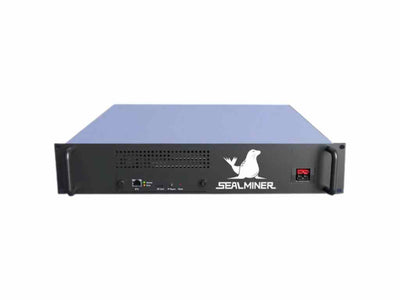
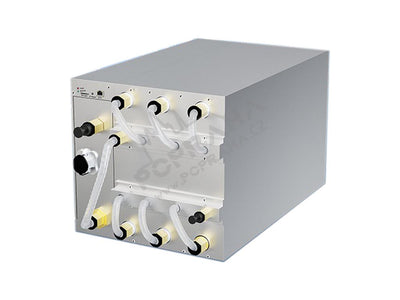
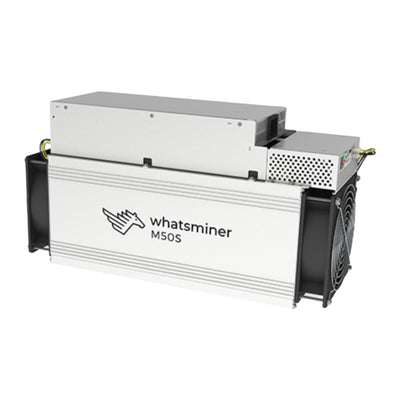
Any SHA-256 ASIC will do. For hosting, the most cost-effective models today are those with an efficiency of up to 16 J/TH (the S21 series and the water-cooled S23 Hyd). For a flat, quiet machines such as the Avalon Q or Avalon Mini 3, which also heat, are suitable. The complete range can be found in the Bitcoin miners (SHA-256) collection – all the machines in it also mine BCH.
Pools and wallets for BCH
BCH is mined by a number of large pools, for example ViaBTC (PPS+ or PPLNS payouts) or Kryptex Pool. On the miner you only change the pool address (stratum URL) and enter your account or BCH address as the user according to the pool's rules. The differences between payout methods are explained in the article PPS, PPLNS and FPPS.
To store BCH, choose a wallet that explicitly supports Bitcoin Cash – there are desktop and mobile apps, and the Trezor and Ledger hardware wallets also support BCH.
Watch out for addresses. The older BCH address format (starting with 1 or 3) looks the same as a Bitcoin one. Sending BTC to a BCH address or vice versa is one of the most common mistakes, and the coins are then hard to recover. Use the bitcoincash:q… format and always copy the address from the wallet the coins are meant to go to.
Risks of mining BCH
- Price. BCH today costs around USD 280, significantly less than at its 2017 peak. The price fluctuates more than Bitcoin's.
- Liquidity. BCH is widely traded, but the volume is many times smaller than BTC's. Larger amounts may be harder to sell.
- A small network. A hashrate of 3 EH/s is a fraction of Bitcoin's. In theory the network is therefore more vulnerable to an attack by a large miner.
- Pool concentration. A large share of blocks is found by only a few pools. Check where you are sending your hashrate.
What next
- SHA-256 coins – a comparison of BTC, BCH, BSV and eCash: earnings, network size and the chance of a solo block.
- ASIC miner profitability – current earnings and payback of specific machines.
Sources
Frequently asked questions
Is Bitcoin Cash the same as Bitcoin?
Where can I sell mined BCH?
Can I run some machines on BTC and some on BCH?
What happens if I send BCH to a Bitcoin address?
This text was prepared with the help of AI. Facts, figures and procedures were checked by Yegor.