eCash (XEC): what it is and how to mine it

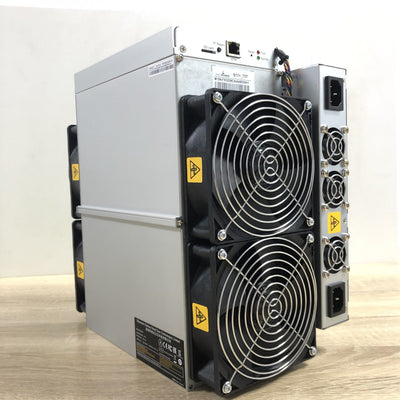
eCash (XEC) is a cryptocurrency created in November 2020 by splitting from Bitcoin Cash – originally under the name Bitcoin Cash ABC (BCHA). It is mined on SHA-256 with the same ASIC miners as Bitcoin. In addition, it uses Avalanche consensus, which confirms a transaction within 3 seconds. Today 1 TH/s earns about 0,89 Kč a day, slightly more than Bitcoin.
Summary
- eCash derives from Bitcoin Cash. In July 2021 BCHA was renamed eCash, and 1 BCHA became 1,000,000 XEC.
- Since April 2024 the block reward has been 3,125,000 XEC. The miner receives 58% of it; the rest goes to development (32%) and stakers (10%).
- The network is small, around 34 PH/s. One Antminer S21++ makes up about 0.7% of its hashrate.
- It can only be mined in pools that explicitly support eCash – a block must satisfy the Avalanche rules.
What eCash is and how it came about
eCash is backed by the Bitcoin ABC development team led by Amaury Séchet. Its node was originally one of the main programs of the Bitcoin Cash network. In 2020 Bitcoin ABC pushed for part of the reward from every block to go mandatorily towards funding development. Most of the BCH community rejected this, and in November 2020 the network split. The branch led by Bitcoin ABC was given the name BCHA.
Since 1 July 2021 it has been called eCash. On renaming, the coins were converted at a ratio of 1 BCHA = 1,000,000 XEC, and the number of decimal places dropped from eight to two. The maximum supply is therefore 21 trillion XEC. According to the project, over 90% of them have already been mined, and annual inflation is below 1%.
Avalanche: what makes eCash different
On top of classic mining (proof of work), eCash runs a second consensus layer, Avalanche. Nodes that have a staked XEC deposit vote quickly among themselves. The project introduced it gradually:
| Date | Change | What it means |
|---|---|---|
| 14 September 2022 | Avalanche Post-Consensus | block finalisation, protection against 51% attacks |
| 15 November 2023 | Staking Rewards | stakers receive 10% of the block reward |
| 11 April 2024 | halving (block 840,000) | reward 6,250,000 → 3,125,000 XEC |
| 15 November 2024 | Real Time Targeting | the network rejects blocks that come too fast; block time is more stable |
| 15 November 2025 | Avalanche Pre-Consensus | transactions are final within 3 seconds |
How eCash is mined
The hardware is the same as for Bitcoin – any SHA-256 ASIC miner. What differs are the block rules. Every block must include a payout to the development fund and a payout to stakers. The node that builds the block must have Avalanche enabled. A block that does not satisfy the rules is rejected by the network, even if it is otherwise valid.
For you as a miner this means only one thing: use a pool that officially supports eCash. An ordinary Bitcoin pool with the coin “added manually” is not enough.
| Who receives the block reward | Share | XEC per block |
|---|---|---|
| Miner (pool) | 58% | 1,812,500 |
| Development fund (miner fund) | 32% | 1,000,000 |
| Stakers (Staking Rewards) | 10% | 312,500 |
The Real Time Targeting rule raises difficulty when blocks arrive faster than they should, and then gradually lowers it. The average block time thus stays around 10 minutes, and “turbo” mining, where a large miner briefly arrives and collects fast blocks, is eliminated.
How much mining eCash earns today
At today's difficulty and exchange rate, 1 TH/s earns about 0,89 Kč a day on eCash, and 0,84 Kč on Bitcoin. An Antminer S21++ (235 TH/s, 3,760 W) would thus mine around CZK 209 a day instead of CZK 197 (as of 18 October 2026, gross, without electricity). Consumption is the same: about 90 kWh a day, i.e. CZK 102 in hosting at CZK 1.13/kWh.
The small network has one interesting side. At a hashrate of around 34 PH/s, one S21++ makes up about 0.7% of the network and statistically finds roughly one block a day. Solo mining – where you receive the entire block reward yourself – therefore makes sense with eCash even with a single machine. It is only an average, though: sometimes two blocks come in a day, at other times none for a whole week.
The higher earnings per TH/s can change quickly. It only takes a few large miners switching to eCash for difficulty to rise. The price also matters – XEC costs fractions of a heller and its price fluctuates more than Bitcoin's.
Pools and wallets
The official eCash website lists pools such as Mining-Dutch, Kryptex Pool, zpool, Zulupool or letsmineit. For solo mining via a service, it mentions Solopool and Molepool among others. How pool payouts differ is explained in the article PPS, PPLNS and FPPS.
You can store XEC, for example, in the Cashtab wallet or in Electrum ABC on a computer. Addresses take the form ecash:q… – do not send XEC to a Bitcoin or Bitcoin Cash address.
If you want to hold XEC long term, you can stake it. Running your own staking node requires at least 100 million XEC in a single output; smaller amounts can be staked through third-party services.
Risks of mining eCash
- Liquidity. XEC trades on fewer exchanges than BTC or BCH. Larger volumes are harder to sell.
- Fluctuating earnings. In a small network, a few large miners arriving or leaving is enough to change earnings per TH/s by tens of per cent.
- 42% of the reward goes to others than miners. The development fund and staking are part of the rules; some see this as an advantage (funding development), others as centralisation.
- Technical requirements on the pool. A pool without support for the eCash rules will mine invalid blocks – use only pools from the project's list.
What next
- SHA-256 coins – a comparison of eCash with Bitcoin, Bitcoin Cash and BSV.
- Bitcoin mining: does it pay off today? – the electricity calculation and machine profitability thresholds also apply to eCash.
- SHA-256 miners – machines that mine both Bitcoin and eCash.
Sources
Frequently asked questions
Is eCash the same as BCHA?
Do I have to stake to mine eCash?
Where can I sell mined XEC?
How quickly is an eCash payment confirmed?
This text was prepared with the help of AI. Facts, figures and procedures were checked by Yegor.