What is cryptocurrency mining and how does it work
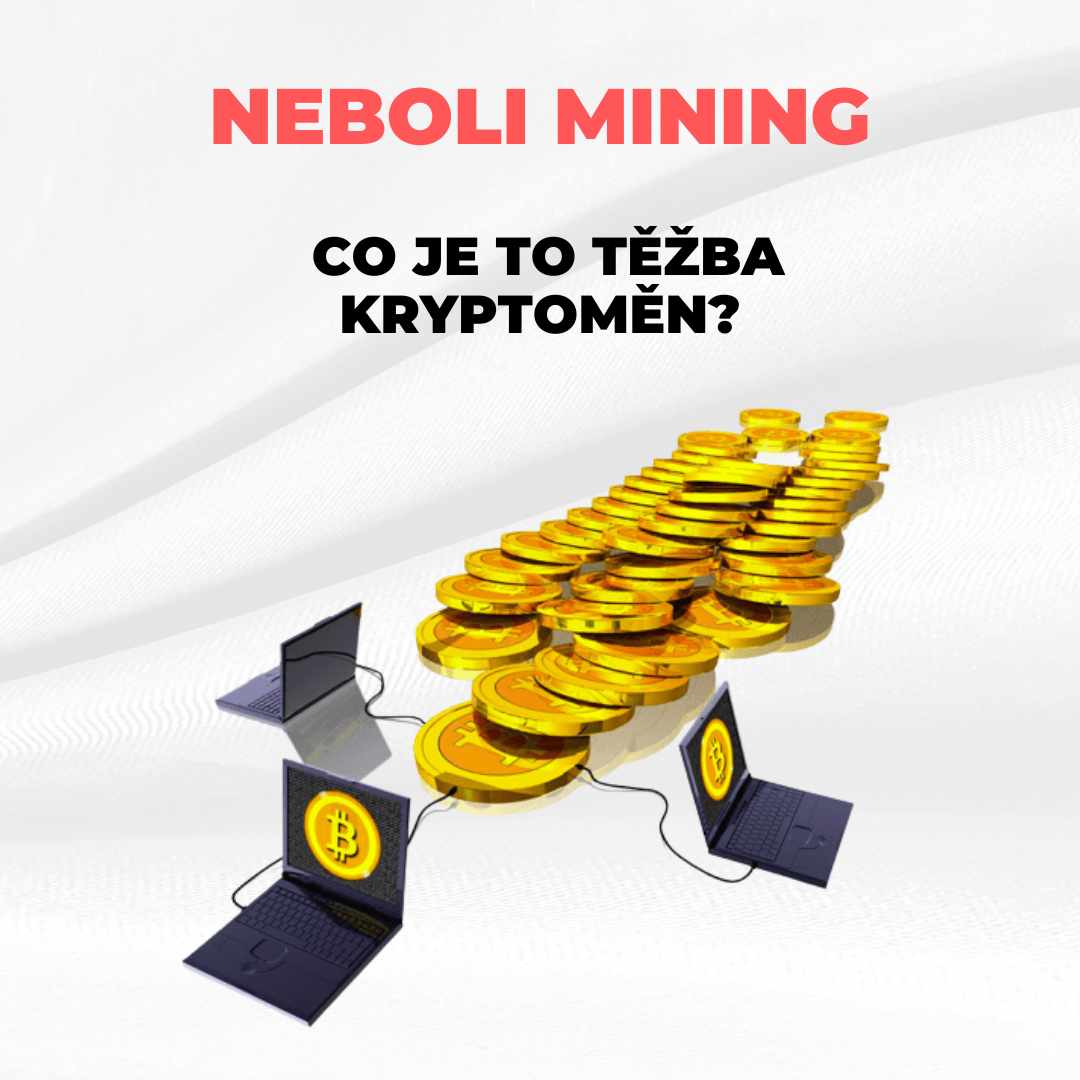
Cryptocurrency mining is a competition between computers for the right to write the next block of transactions to the blockchain. The winner must be the first to find a number with which the output of a cryptographic function meets the network's condition – and for this work receives newly created coins and the transaction fees. At the same time, this protects the network against fraud, because rewriting history would cost the same enormous amount of electricity and computation.
Summary
- Miners group transactions into blocks and look for a valid “fingerprint” (hash) for them. The principle is called proof-of-work.
- Whoever finds the block gets a reward. For Bitcoin, since the April 2024 halving, it is 3.125 BTC per block plus fees.
- Difficulty adjusts itself so that a block is created on average once every 10 minutes, no matter how many machines are mining.
- Today mining is done with specialised machines (ASICs). Earnings depend on hashrate, electricity price, difficulty and the coin's exchange rate.
What exactly a miner does
When you send bitcoins, the transaction first waits in a queue. A miner picks transactions from the queue, verifies that the sender really has the money and hasn't spent it twice, and assembles a candidate for a new block from them. It also contains a reference to the previous block – which is why we talk about a chain of blocks, the blockchain.
However, the network only accepts the block once the miner attaches a valid proof of work. And that cannot be calculated cleverly – only guessed by trial and error.
How proof-of-work works: an example you can try yourself
Bitcoin uses the SHA-256 function. From any text it produces a fingerprint 64 characters long. Change a single character and the fingerprint is completely different – there is no way to predict in advance what it will look like.
We tried it on the text “PC Praha” with a sequence number (the so-called nonce) at the end:
| Input | Resulting SHA-256 hash (start) | Meets the “0000…” condition? |
|---|---|---|
| PC Praha 0 | e6a43743… | no |
| PC Praha 1 | 521e88a4… | no |
| PC Praha 13 | 0265529e… | no (only one zero) |
| PC Praha 272 | 002066e8… | no (two zeros) |
| PC Praha 1703 | 0000b9c4… | yes |
It took 1,704 attempts to get four leading zeros. Each additional zero means 16 times more attempts on average. A real Bitcoin block today requires a hash starting with roughly 19 zeros. That is why the whole network tries around 1,000 EH/s, i.e. 1021 attempts per second (as of 18 Oct 2026).
Verification, on the other hand, is instant: anyone can compute a single hash and see that the condition holds. Searching is expensive, checking is cheap – that is the whole trick of proof-of-work. Some networks, such as Ethereum, do not use mining at all and confirm blocks based on locked coins (proof-of-stake).
What the block reward is and where new coins come from
The miner who finds a block may write into it a transaction “from nothing” to their own address. That is how new coins are created. On top of that, they receive the fees from all the transactions in the block.
- Bitcoin produces roughly 144 blocks a day, i.e. about 450 new BTC a day.
- Every 210,000 blocks (about 4 years) the reward is halved – that is the halving. The next one is expected in 2028.
- There will never be more than 21 million in total. The 20 million mined BTC mark was passed in March 2026; the last million will take more than a hundred years to mine.
What difficulty is and why it changes
If the number of zeros never changed, blocks would appear faster with every new machine. The network therefore recalculates the difficulty every 2,016 blocks (roughly two weeks): if blocks were created faster than every 10 minutes, it tightens the condition; if slower, it relaxes it.
For miners this has a practical consequence. When new machines join the network, your share of total hashrate falls and you mine fewer coins, even though your miner runs exactly the same. That is why earnings are not fixed but recalculated. Today 1 TH/s on Bitcoin earns approximately 0,84 Kč a day gross, before electricity.
Why mining today is done on ASICs, not a computer
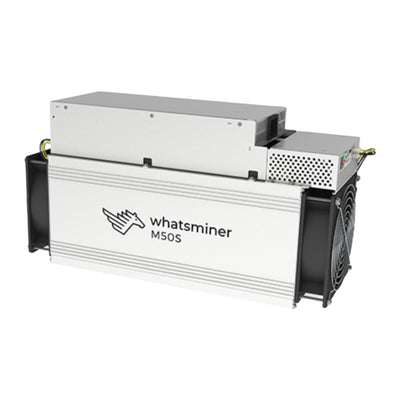
In 2009 the processor of an ordinary computer was enough. Then came graphics cards and, from 2013, ASIC miners – chips that can only run one algorithm, but a thousand times more efficiently. For Bitcoin, what matters most today is efficiency in J/TH, i.e. how much energy one terahash costs.
Moreover, most miners don't mine alone. They pool their hashrate in a pool that finds blocks frequently and splits the reward according to the work done. We describe how a pool calculates payouts in our article PPS, PPLNS and FPPS.
What it could look like for you: a simple calculation
A home miner with 37.5 TH/s mines roughly 37.5 × CZK 0.84 ≈ CZK 31 a day at today's difficulty and exchange rate. But it uses 800 W, i.e. 19.2 kWh a day. At CZK 5/kWh that is CZK 96 for electricity.
This leads to the most important rule of mining: profit is determined by the electricity price and the machine's efficiency, not by hashrate alone. That is why large machines are run in data centres with cheap energy, and home mining mainly makes sense when the heat is used or surplus solar power is available.
What next
- Want to get started in practice? You will find the process from choosing a coin to your first payout in our guide How to mine cryptocurrencies.
- What specific machines earn today is shown in our ASIC miner profitability overview, recalculated every hour.
Sources
Frequently asked questions
Is crypto mining legal in the Czech Republic?
Can I mine on an ordinary computer or laptop?
What happens when all 21 million bitcoins have been mined?
Why does mining use so much electricity?
How much bitcoin does one miner mine per day?
This text was prepared with the help of AI. Facts, figures and procedures were checked by Yegor.