Kaspa (KAS): what it is, how it is mined and how much it earns

Kaspa (KAS) is a proof-of-work cryptocurrency that uses a blockDAG instead of a classic chain of blocks – the network produces 10 blocks per second and confirms transactions within a few seconds. It is mined with the kHeavyHash algorithm, today only on ASIC miners. As of 18 Oct 2026, about 96% of all coins are in circulation, and since June 2026, after the Toccata hard fork, the network also supports programmable conditions (covenants).
Summary
- Kaspa started as a “fair launch” – with no premined coins and no sale to investors.
- The kHeavyHash algorithm, 10 blocks per second, a reward that falls every month and halves over a year. The maximum supply is approximately 28.7 billion KAS.
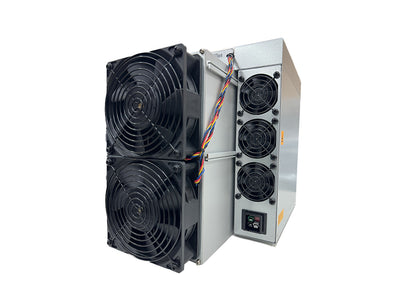
- Today 1 TH/s earns approximately 3,55 Kč a day. Graphics cards no longer stand a chance; it is mined on ASIC miners such as the IceRiver KS7.
- The Toccata hard fork (30 Jun 2026) added covenants and ZK proof verification. Mining did not change; minimum fees did.
- Main risks: falling emission, rising difficulty and a price that, as of 18 Oct 2026, is roughly 83% below its all-time high.
What Kaspa is and how it differs from Bitcoin
In Bitcoin, one block is created roughly every 10 minutes. When two miners find a block at the same time, one of them “loses out” and their work is wasted. Kaspa solves this problem with the GHOSTDAG protocol: blocks can be created in parallel, reference multiple predecessors, and the protocol orders them afterwards. The result is a graph of blocks (blockDAG), not a simple chain. We explain how a classic chain works in our article Blockchain.
This allows the network to speed up without losing security. It used to run at 1 block per second, and 10 blocks per second was first tested on a test network (Testnet 11). On mainnet, 10 blocks per second has applied since the Crescendo hard fork in May 2025.
| Parameter | Kaspa (KAS) | Bitcoin (BTC) |
|---|---|---|
| Structure | blockDAG (GHOSTDAG) | chain of blocks |
| Block rate | 10 blocks per second | 1 block per ~10 minutes |
| Consensus | Proof of Work | Proof of Work |
| Algorithm | kHeavyHash | SHA-256 |
| Maximum supply | ~28.7 bn KAS | 21 m BTC |
| Reward reduction | every month, halving over a year | in steps every 4 years (halving) |
| Launch | fair launch, no premine | 2009 |
Like Bitcoin, Kaspa is a proof-of-work network: security is provided by miners' computing power, not by coin holders.
How Kaspa is mined: algorithm, block and reward
Kaspa is mined with the kHeavyHash algorithm. It was originally designed to be mineable on graphics cards, and in 2021–2022 it really was mined that way (NVIDIA RTX 2000/3000, AMD RX 6000, often via HiveOS or lolMiner). In 2023, however, the first ASIC miners from IceRiver arrived, and within a few months GPU mining stopped paying off.
Kaspa's emission does not follow a four-year halving like Bitcoin. The reward falls smoothly – by roughly 5.6% each month, so that over 12 months it is reduced to exactly half. The developers call this a “chromatic” emission, after the twelve tones of the musical scale.
| Figure (as of 18 Oct 2026) | Value |
|---|---|
| Block reward | 2.06 KAS (20.6 KAS per second) |
| New coins per day | ~1.78 m KAS |
| Next reward reduction | to 19.45 KAS per second |
| Coins in circulation | ~27.74 bn KAS (about 96% of the maximum) |
| Network hashrate | ~375 PH/s |
| Price | 0,75 Kč (~USD 0.035) |
For miners this means one simple thing: fewer new coins are created every month. If the price does not rise, a machine's earnings fall even at the same network hashrate. Besides the reward, miners also receive transaction fees. These rose noticeably during periods of high activity, for example during the mass minting of KRC-20 tokens at the end of 2024. Most income, however, still comes from emission.

How the network hashrate has developed
Kaspa is a prime example of how quickly mining changes when ASICs arrive on the market. From our older articles, we have a record of the network's state at the time when the first miners were just arriving:
| Period | Network hashrate | What was happening |
|---|---|---|
| August 2023 | 7 → 8 PH/s in a single day | The IceRiver KS0 (100 GH/s) earned about USD 8.5–10 a day, with payback of around 3.5 months |
| October 2023 | over 33 PH/s | unofficial firmware boosts the hashrate of the KS0–KS2, KS0 payback stretches to 5–8 months |
| 18 Oct 2026 | ~375 PH/s | the KS0 earns roughly CZK 0.35 a day, machines with 30–40 TH/s are on the market |
The lesson from 2023–2024: with a new coin and the first ASICs, timing is everything. Those who started a machine in the first weeks got their investment back quickly. Those who waited months for delivery ran into many times higher difficulty.
How much Kaspa earns today
At today's difficulty and exchange rate, 1 TH/s on Kaspa earns approximately 3,55 Kč a day (gross, before electricity). We recalculate the figure every hour.
Example for the IceRiver KS7 with 30 TH/s and 3,500 W consumption:
- gross earnings: 30 × CZK 3.55 ≈ CZK 106 a day,
- consumption: 3.5 kW × 24 h = 84 kWh a day,
- in hosting at 1,13 Kč/kWh, electricity costs about CZK 95 a day, leaving only around CZK 11,
- at home at CZK 5/kWh, electricity would cost CZK 420 a day – mining would be at a loss.
As of 18 Oct 2026, Kaspa is therefore on the edge of profitability even with a modern machine and cheap electricity. Earnings change with the coin price and network hashrate, so keep an eye on them in our ASIC miner profitability table.
Which miner to use for Kaspa
What matters is efficiency in J/TH – how much energy the machine uses per 1 TH/s. Because of their high consumption, older models now have negative earnings almost everywhere.
| Miner | Hashrate | Consumption | Efficiency | Gross earnings today |
|---|---|---|---|---|
| IceRiver KS0 | 100 GH/s | 65 W | 650 J/TH | ~CZK 0.35/day |
| IceRiver KS5L | 12 TH/s | 3,400 W | 283 J/TH | ~CZK 43/day |
| Antminer KS5 Pro | 21 TH/s | 3,150 W | 150 J/TH | ~CZK 75/day |
| IceRiver KS7 | 30 TH/s | 3,500 W | 117 J/TH | ~CZK 106/day |
| Antminer KS7 | 40 TH/s | 3,080 W | 77 J/TH | ~CZK 142/day |
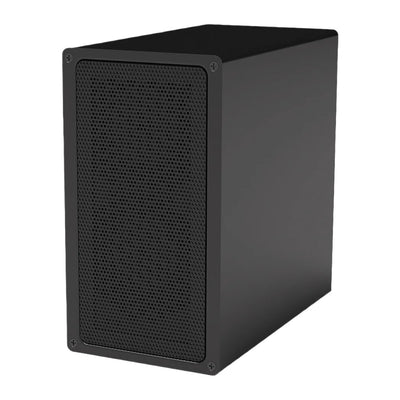
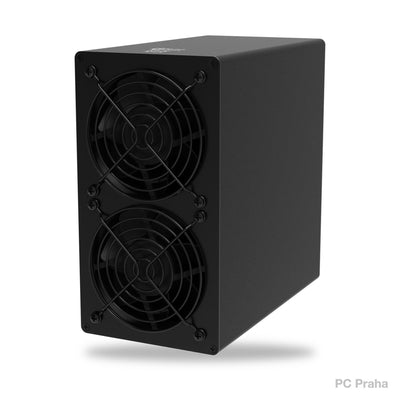
The earnings in the table are calculated from the value of CZK 3.55 per TH/s on the morning of 18 Oct 2026 and do not include electricity. You will find the current range in the Kaspa miners (kHeavyHash) collection, currently mainly the IceRiver KS7 30 TH/s. Because of noise around 75 dB and a 3.5 kW draw, these machines belong in a plant room or a data centre, not a flat.
Our older video shows the difference between a graphics card and an ASIC miner on Kaspa (in Czech). The figures in the video reflect the time of filming (2024); the principle still applies.
Pools and wallets for mining Kaspa
Solo mining Kaspa only makes sense with a large hashrate; a typical miner joins a pool. Example as of 18 Oct 2026: Kryptex Pool has a European server stratum+tcp://kas-eu.kryptex.network:7011, PPS+ payouts with a 1% fee and a minimum payout of 10 KAS. We describe how payout methods differ in our article PPS, PPLNS and FPPS. Server addresses change, so always check them directly on the pool's website.
In the pool you enter a wallet address in the form kaspa:q…. Which wallets the official Kaspa website recommends today, and why you should no longer use the old wallet.kaspanet.io, is shown in our guide Kaspa wallet: how to set one up. How to set up the pool directly in the miner is covered in our article Setting up the IceRiver KS0–KS3.
Besides Kaspa, a kHeavyHash miner can also earn rewards in other coins. One example is simultaneous mining of Canxium, which we describe in our article Dual mining Kaspa and Canxium.
What the Toccata hard fork brought
On 30 Jun 2026 (at DAA score 474,165,565), the Toccata hard fork activated on mainnet. There was no chain split and no new coin. The main changes:
- Covenants – coins can be “locked” with conditions that every subsequent transaction must meet. This can be used to build escrow, smarter wallets or tokens.
- ZK proof verification directly on the network (Groth16, RISC Zero). Applications can compute off the main network and merely prove the result on it.
- Higher minimum fee – from 1 to 100 sompi per gram of transaction. For ordinary transfers, fees remain fractions of a cent, but older software with a hard-coded fee had to be updated.
For miners, the only change was that pools and own nodes had to switch to the new software version (rusty-kaspa 2.0.1 and newer). The kHeavyHash algorithm and 10 blocks per second remain. You will find details and background in our news piece Kaspa Toccata hard fork. The next planned step, DAGKnight consensus, has not been launched on mainnet as of 18 Oct 2026.
Risks you should know about
- Falling emission: the reward halves every year. Without a rise in price or fees, miners' earnings fall permanently.
- Rising difficulty: manufacturers keep launching more powerful machines. Each new generation reduces older machines' share of the reward.
- Price volatility: the all-time high was USD 0.208 (1 Aug 2024); as of 18 Oct 2026, KAS trades at around USD 0.035. We discuss possible scenarios in our article Kaspa price prediction.
- Network usage: Toccata gave the network new capabilities, but whether applications with real users will be built on it is not yet certain.
- Risks of your own machine: a single-algorithm ASIC cannot be switched to another major coin. Unofficial firmware with higher hashrate usually voids the warranty.
What next
- Calculate the current earnings of a specific machine in our ASIC miner profitability table.
- If you don't have cheap electricity, take a look at ASIC miner hosting in data centres in Europe, the USA and Africa.
- Before you start mining, set up a wallet following our guide Kaspa wallet.
Sources
Frequently asked questions
Can Kaspa still be mined on a graphics card?
How much Kaspa is left to mine?
Did the Toccata hard fork change anything for mining?
Does Kaspa have a halving like Bitcoin?
Is it worth mining Kaspa at home in the Czech Republic?
This text was prepared with the help of AI. Facts, figures and procedures were checked by Yegor.