Zcash and Kaspa: can Zcash's growth story repeat with Kaspa? Facts, not promises
Nobody can guarantee that Zcash's story will repeat with Kaspa – and nobody can seriously predict it either. After years of stagnation, Zcash grew thanks to several things coming together: a strong privacy theme, real use of shielded transactions, new wallet features and an institutional product (an ETF). Kaspa has the technology and the community, but it does not yet meet many of these conditions. Below is a comparison backed by data and sources.
This article is for information only and is not investment advice. Past price performance does not guarantee future results; the price of cryptocurrencies can fall by tens of per cent.
Summary
- Zcash (launched 2016) traded mostly between USD 20 and 80 for roughly three years before October 2025. From mid-September 2025 to 1 Nov 2025 it rose from about USD 50 to about USD 420, and on 4 Sep 2026 it passed USD 1,000 for the first time since 2016.
- Documented reasons for the rise: the debate about financial surveillance in the EU, a fast increase in coins held in the shielded pool, swaps directly in the Zashi wallet, public support from well-known investors and, in August 2026, a spot ETF from Grayscale.
- Kaspa (launched November 2021, no premine) is priced at about USD 0.035 as of 29 Oct 2026, roughly 83% below its summer 2024 high, with a market cap of around USD 1 billion.
- What Kaspa mainly lacks today: major exchanges (Coinbase, spot on Binance), institutional products in the USA and documented mass use of applications after the Toccata hard fork.
- For miners the difference is large today: the Antminer Z15 Pro earns money on Zcash even with household electricity, while a Kaspa miner loses money on household electricity.
What Zcash's story looked like: from the peak to years of stagnation
Zcash (ZEC) was launched in October 2016 by the team that became the Electric Coin Company (ECC). It is based on Bitcoin's code, has a cap of 21 million coins and, on top of that, optional private (shielded – sender, recipient and amount are encrypted) transactions. We describe it in detail in the article Zcash (ZEC).
The all-time high of USD 5,941.80 in October 2016 came in the first days of trading, when very few coins were in circulation. Years of decline followed. According to The Block, ZEC was still mostly in the USD 20–80 range for three years before October 2025. Even the halving in November 2024, which cut the number of new coins in half, changed almost nothing for nearly a year.
What actually drove Zcash's rise in 2025–2026
The decisive factor was several things coming together. We list only those backed by sources:
| Date | What happened | ZEC price (approx.) |
|---|---|---|
| mid-Sep 2025 | starting point of the rise | ~USD 50 |
| 28 Aug and 1 Oct 2025 | the Zashi wallet launched swaps into and out of ZEC via NEAR Intents, without a centralised exchange | — |
| 10 Oct 2025 | a rise of more than 40% in a day, above USD 230 for the first time in three years | USD 230 |
| 1 Nov 2025 | the Orchard pool (the newest shielded pool) exceeded 4.1 million ZEC | ~USD 420 |
| 26 Nov 2025 | Grayscale filed with the SEC to convert the Zcash Trust into an ETF | — |
| 7 Jan 2026 | the entire ECC team left after a dispute with the non-profit parent organisation Bootstrap and is founding a new company | ~USD 456 |
| 25 Aug 2026 | Grayscale's ETF (ZCSH) began trading on NYSE Arca | ~USD 800 |
| 4 Sep 2026 | ZEC briefly above USD 1,000, short liquidations of USD 34.5 million | ~USD 1,023 |
| 29 Oct 2026 | current status (CoinGecko) | 27 088 Kč (~USD 1,240) |
This points to four main driving forces:
- A strong and timely narrative. Financial surveillance was being debated in the EU. New European anti-money-laundering rules are set to restrict trading of anonymous coins on regulated exchanges from 2027. Privacy thus became the topic of the day.
- Measurable use. Coins are moved into the shielded pool voluntarily. Analysts therefore took the growth of the shielded supply as evidence of real use, not just speculation.
- A product for ordinary users. Zashi made it possible to swap other cryptocurrencies for shielded ZEC directly on a phone.
- Vocal supporters and institutions. Arthur Hayes, Naval Ravikant and Mert Mumtaz publicly backed Zcash. An ETF application followed, and in August 2026 its launch.
What did not work out matters too. After the peak in November 2025, the price fell by about 72% to below USD 200 by 8 Mar 2026, according to a GhostSwap overview (CoinGecko data). The rise was therefore not smooth, and anyone who bought at the top was at a large loss for months. For the September jump above USD 1,000, sources also point out that it was amplified by forced liquidations of bets on a fall and that the ETF itself is not documented as the cause.
Where Kaspa stands today
Kaspa (KAS) has been running since November 2021. It launched as a fair launch (no pre-mined coins, no presale and no share for the founders). Instead of a single chain of blocks it uses a blockDAG (a network of blocks that can be created in parallel) with the GHOSTDAG protocol. Since the Crescendo upgrade in May 2025 it produces 10 blocks per second. The technical basics are summarised in the article Kaspa (KAS).
| Kaspa metric | Value |
|---|---|
| Price (29 Oct 2026) | 0,77 Kč (~USD 0.035) |
| All-time high | ~USD 0.207 (31 Jul 2024), now about −83% |
| Market cap | a little over USD 1 billion (around 75th place as of 25 Oct 2026) |
| Coins in circulation | 27.77 billion of a max. 28.70 billion KAS (96.8%) |
| Emission | a “chromatic” halving – the reward drops every month and halves over a year; next step on 4 Nov 2026 |
| Network hashrate (29 Oct 2026, our data) | ~365 PH/s, mined only on ASIC miners |
| Development | volunteers and community donations (the rewrite of the node in Rust was funded by a grant of 100 million KAS); Toccata hard fork on 30 Jun 2026, DAGKnight not yet live |
Kaspa's decline from its high has lasted about 15 months so far. Zcash waited for a turnaround from 2016 until 2025. The length of a “winter” predicts nothing by itself – it only shows that a turnaround can take years, or never come at all.
Zcash and Kaspa side by side
| Parameter | Zcash (ZEC) | Kaspa (KAS) |
|---|---|---|
| Launch | October 2016 | November 2021 |
| Launch type | part of the block reward goes to development (20% today) | fair launch, no premine, no fund from rewards |
| Consensus and algorithm | Proof of Work, Equihash | Proof of Work, kHeavyHash |
| Block time | 75 s | 0.1 s (10 blocks per second) |
| Maximum supply | 21 million ZEC | ~28.7 billion KAS |
| Reward reduction | halving every 4 years (next 11/2028) | every month, halving over a year |
| Main story | optional transaction privacy | speed and scaling of PoW without premine |
| ETF / ETP | Grayscale ZCSH spot ETF in the USA (since 25 Aug 2026) | only a smaller European ETP (Valour Kaspa SEK) |
| Coinbase | yes | no |
| Binance | yes | futures only (since November 2023) |
| Price vs. high | below the 2016 high, but the highest since 2016 | ~−83% from the 2024 high |
What Kaspa would need for a similar rise to be possible
For each condition we show where Kaspa stands today according to available data. Meeting the conditions does not guarantee a rise – these are prerequisites, not a recipe.
| Condition | Zcash | Kaspa today |
|---|---|---|
| Strong community | yes, plus well-known supporters | yes – the project relies on volunteers and donations |
| Measurable use | shielded supply over 4 million ZEC | after Toccata in August 2026, thousands of covenant transactions a day, but according to Kaspalytics this may be a handful of active developers rather than a mass of users |
| Major exchanges and liquidity | Coinbase, Binance, ETF | Kraken and Bitvavo (KAS/EUR), Bitget, MEXC; no Coinbase and no spot on Binance |
| Wallets for ordinary people | Zashi with swaps | several wallets, see Kaspa wallet |
| Developers and ecosystem | paid teams funded from the block reward | Toccata done, DAGKnight and the application layer in development, funded by donations |
| Clear and timely narrative | privacy at a time of debate about surveillance | fast PoW without premine – clear, but without an acute “trigger” |
| Institutional products | ETF in the USA | only a small ETP in Sweden |
The biggest difference lies in two points. Zcash had a theme that the whole market was dealing with at that moment, plus a number that documented its use. Kaspa still lacks both at a comparable strength. On the other hand, Kaspa has no fund taken from the block reward – for miners that means the full reward, for development a dependence on donations.
Risks and counter-arguments
- The past guarantees nothing. For every successful comeback there are many coins that never recovered from a crash.
- Zcash is not just a success story. It had nine years of stagnation, a drop of tens of per cent after the peak and the departure of its main development team in January 2026.
- Competition. There are many fast networks with smart contracts, and they have more users and more money for development.
- Dependence on mining and price. Miners sell newly mined KAS every day to pay for electricity. If the price falls, some of them switch their machines off and the network hashrate drops.
- Regulation. For Zcash it cuts both ways – it helped the narrative, but in the EU it may restrict trading from 2027. For Kaspa it may affect listings.
- The rise may never come. It is entirely realistic that Kaspa will remain a technically interesting network with a low price.
What to watch out for with price “predictions” is covered in the article Kaspa price prediction.
What this means for miners
A miner does not earn from a story, but from how much the machine mines per day after paying for electricity. Here the two coins are at opposite ends today. For 1 TH/s on Kaspa you get 3,78 Kč a day today, for 1 kSol/s on Zcash 1,28 Kč a day. Converted to machines from our range as of 29 Oct 2026 (gross revenue before pool fee):
| Miner | Hashrate / power draw | Gross revenue / day | After electricity – hosting 1.15 Kč/kWh | After electricity – at home 4.5 Kč/kWh |
|---|---|---|---|---|
| Antminer KS7 (Kaspa) | 45 TH/s / 3,465 W | ~170 Kč | ~+74 Kč | ~−204 Kč |
| IceRiver KS7 (Kaspa) | 30 TH/s / 3,500 W | ~113 Kč | ~+17 Kč | ~−265 Kč |
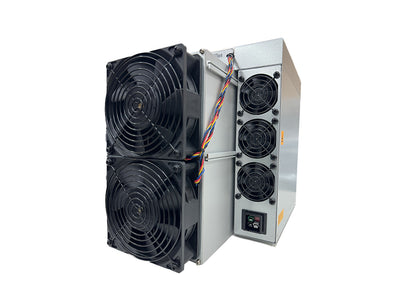
| Antminer Z15 Pro (Zcash) | 860 kSol/s / 2,847 W | ~1,103 Kč | ~+1,024 Kč | ~+795 Kč |
The Antminer KS7 45 TH/s mines about 220 KAS a day today. On hosting it needs a price of at least roughly 0.44 Kč per KAS, at home at 4.5 Kč/kWh about 1.70 Kč – more than double today's price. With Zcash, electricity is only a small part of the revenue, but the revenue depends almost entirely on the ZEC exchange rate. If the price fell to its spring 2026 level, the Z15 Pro's revenue would drop to roughly a sixth.
That is why, for Kaspa miners, we currently recommend hosting with cheap electricity rather than running them at home – in the Czech Republic a household tariff does not cover the machine's revenue. The cheapest location of our hosting currently costs 1,15 Kč/kWh. Also keep Kaspa's emission in mind: in a year the same machine at the same network hashrate will mine half as many coins.
The figures change every hour. You will find the current status of all machines in the ASIC miner profitability table (recalculated 29. 10. 2026).
What next
- Kaspa miners – IceRiver and Antminer KS7 with a payback calculator by location.
- Zcash miners – Antminer Z15 Pro and Z15K.
- Zcash and Monero vs. Bitcoin – why they are more profitable to mine than BTC this year.
Sources
- The Block (1 Nov 2025): ECC roadmap, price and shielded supply of ZEC
- DL News (3 Nov 2025): Zcash and the bet on privacy ahead of EU rules
- The Block (26 Nov 2025): Grayscale applies for a Zcash ETF
- The Block (8 Jan 2026): the ECC team leaves
- Grayscale (25 Aug 2026): ZCSH ETF begins trading on NYSE Arca
- Bitzo (5 Sep 2026): ZEC above USD 1,000 and short liquidations
- GhostSwap: ZEC price timeline 2025–2026 (CoinGecko data)
- kaspa.org: fair launch, 10 BPS, DAGKnight, grant for the Rust rewrite
- Cryptoticker (25 Oct 2026): Kaspa's emission, supply, price and exchanges
- Kaspalytics (6 Aug 2026): use of covenants after Toccata
- extraETF: Valour Kaspa (KAS) SEK, ISIN CH1108679379
Frequently asked questions
Zopakuje Kaspa růst Zcashe?
Proč Zcash v letech 2025–2026 tolik vyrostl?
Je Kaspa na Coinbase nebo Binance?
Vyplatí se dnes těžit Kaspu doma?
Je tento článek investiční radou?
This text was prepared with the help of AI. Facts, figures and procedures were checked by Yegor.