Ethereum Classic (ETC): what it is, how it is mined and with which ASIC miners
Ethereum Classic (ETC) is the original Ethereum chain, which in 2016 refused to rewrite history after The DAO hack and has stayed with mining (proof-of-work) to this day. It is mined with ASIC miners on the Etchash algorithm, a block is produced roughly every 13 seconds and since July 2026 the reward has been 1.6384 ETC. Today 1 GH/s earns approximately 9,85 Kč per day.
Summary
- Since Ethereum moved to proof-of-stake (2022), ETC has been the largest smart-contract network that is still mined.
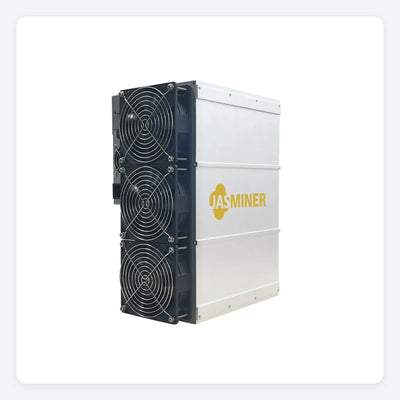
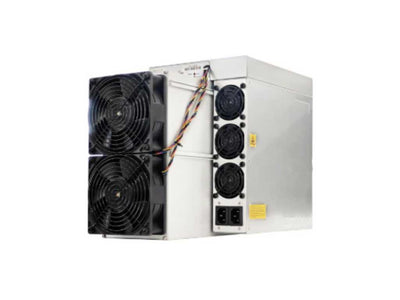
- The Etchash algorithm is mined with ASIC miners such as the Jasminer X44-P (23.4 GH/s) or the Antminer E11 (9.5 GH/s). Graphics cards can no longer compete with them.
- The reward drops by 20 % every 5 million blocks. The latest reduction took place in July 2026 (from 2.048 to 1.6384 ETC); the next one will come around 2028.
- The maximum supply is firmly capped at roughly 210.7 million ETC.
- At today's figures, only an efficient machine with cheap electricity makes sense. At Czech household electricity prices, mining ETC does not pay off.
What Ethereum Classic is
Ethereum was launched in July 2015. In June 2016 an attacker exploited a bug in The DAO smart contract and drained a large part of the funds raised. Most of the community decided to modify the blockchain's history and return the money – so on 20 July 2016 a hard fork took place at block 1,920,000.
Some users and miners rejected the change, arguing that "code is law", and continued on the original, unmodified chain. It was named Ethereum Classic. The modified chain is today's Ethereum (ETH).
The fundamental difference came in September 2022, when Ethereum switched from mining to proof-of-stake (The Merge). Ethereum Classic stayed with mining and thus became the main minable network with Ethereum-compatible smart contracts. We explain the difference between the two security models in the article Proof of Work vs. Proof of Stake.
How Ethereum Classic is mined
| Parameter | Ethereum Classic (ETC) |
|---|---|
| Algorithm | Etchash (modified Ethash, memory-intensive) |
| Block time | approx. 13 seconds (13.6 s on average as of 23 Oct 2026) |
| Block reward | 1.6384 ETC (era 6, blocks 25–30 million) |
| Reward reduction | by 20 % every 5,000,000 blocks (approx. 2 years) |
| Maximum supply | approx. 210.7 million ETC |
| Hashrate unit | GH/s (billions of hashes per second) |
| Network hashrate as of 23 Oct 2026 | approx. 185 TH/s |
| Price | 170 Kč per 1 ETC |
Etchash was created in November 2020 by modifying the original Ethash algorithm (the Thanos upgrade). The period during which the in-memory dataset (DAG) stays unchanged was extended, so the DAG grows more slowly. This allowed older graphics cards with less memory to keep mining for longer.
Today, however, the network is dominated by ASIC miners. After Ethereum moved to proof-of-stake, a huge share of graphics card hashrate migrated to ETC. It then gradually disappeared, because ASICs are several times more efficient per unit of hashrate. We discuss why graphics cards no longer pay off in the article Mining with graphics cards.
How the block reward is reduced
Ethereum Classic has no halving like Bitcoin. The reward is cut by one fifth every 5 million blocks – the rule is known as "5M20" (ECIP-1017). As a result, the total supply is capped, even though the original Ethereum never behaved this way.
| Era | Blocks | Block reward | Approximate period |
|---|---|---|---|
| 4 | 15–20 m | 2.56 ETC | 2022–2024 |
| 5 | 20–25 m | 2.048 ETC | 2024–7/2026 |
| 6 (current) | 25–30 m | 1.6384 ETC | 7/2026–2028 |
| 7 | 30–35 m | 1.31072 ETC | from approx. 2028 |
For miners this means one simple thing: unless the ETC price rises, the revenue of a single machine drops by roughly 20 % after each reduction. When calculating payback, assume another step down in 2028. The date is only approximate – it depends on the actual block time.
How much an ETC miner earns today
For 1 GH/s it is 9,85 Kč per day today, roughly 0.058 ETC in coins. The table shows the machines we offer, at the difficulty and exchange rate as of 23 Oct 2026. We calculate electricity at the cheapest location of our hosting (1,14 Kč/kWh) and, for comparison, at 4 Kč/kWh, which corresponds to a typical household price in the Czech Republic.
| Miner | Hashrate | Power draw | Efficiency | Gross revenue / day | Electricity / day at 1.14 Kč/kWh | Electricity / day at 4 Kč/kWh |
|---|---|---|---|---|---|---|
| Jasminer X44-P | 23.4 GH/s | 2,550 W | 0.109 J/MH | approx. 230 Kč | approx. 70 Kč | approx. 245 Kč |
| Antminer E11 | 9.5 GH/s | 2,470 W | 0.26 J/MH | approx. 94 Kč | approx. 67 Kč | approx. 237 Kč |
From the table follows our own calculation of the "electricity break-even", i.e. the price per kWh at which the machine just covers its power costs:
- Jasminer X44-P: roughly 3.8 Kč/kWh. On hosting it currently keeps around 160 Kč per day after paying for electricity.
- Antminer E11: roughly 1.6 Kč/kWh. Even at the cheapest location it keeps only around 26 Kč per day; with household electricity it would make a loss.
To give you an idea of payback: the Jasminer X44-P costs 246,330 Kč in the hosted version. At today's net revenue of around 160 Kč per day, that would take over 4 years – and the 2028 reward reduction falls within that period. The result therefore depends mainly on the future ETC price, which nobody knows. The calculation excludes pool fees and is for guidance only; it is not a promise of returns.
Jasminer X44-P or Antminer E11?
- Jasminer X44-P offers 2.4× higher hashrate at a similar power draw. Per 1 GH/s it uses 58 % less energy than the E11 and is the only one of the two that still makes sense today after paying for electricity. It is air-cooled, weighs 14 kg and belongs in a technical room or on hosting.
- Antminer E11 is considerably cheaper to buy (from 51,398 Kč hosted), but with an efficiency of 0.26 J/MH it is already on the edge of profitability today. Its noise level is around 75 dB and it weighs 15.8 kg. Besides ETC, it can also mine OctaSpace (OCTA) – but always only one of the coins at a time.
You will find both machines in the collection Ethereum Classic miners. On each product page, a calculator works out revenue and payback for the selected location. If you do not have your own cheap electricity, you can run the machine straight away in our data centre – the locations in the USA, Finland, Norway and Nigeria have an electricity price that includes management.
Pools and wallets
Ethereum Classic is supported by most major pools, for example 2Miners, F2Pool or ViaBTC. They differ in fees, minimum payout and payout method – the differences are explained in the article PPS, PPLNS and FPPS.
An ETC address has the same format as an Ethereum address (it starts with 0x). You can use Ledger and Trezor hardware wallets or wallets for Ethereum-compatible networks – in those you need to add the Ethereum Classic network (chain ID 61).
Caution: the identical address format makes mistakes easy. On an exchange, always check that you are sending and receiving on the Ethereum Classic network, not Ethereum. Coins sent to the wrong network by mistake are difficult to recover, or cannot be recovered at all.
What is coming to the network: the Olympia upgrade
Ethereum Classic developers are preparing the Olympia upgrade. It will bring an EIP-1559 fee market, but the base fee will not be burned as on Ethereum – it will go to a protocol treasury whose use will be put to a vote. The upgrade is also intended to align the virtual machine with current Ethereum.
What matters for miners is that, under the proposal, the block reward and user tips remain with miners. The mainnet activation date has not been fixed yet; the project expects 2027 after a successful test on the Mordor testnet.
Risks of mining Ethereum Classic
- Exchange rate: with an efficient machine, electricity makes up a smaller part of the costs, so revenue depends mainly on the ETC price. If it falls, revenue falls proportionally.
- Reward reductions: by 20 % roughly every 2 years. The next step is expected around 2028.
- Network security: in 2019 and 2020, Ethereum Classic suffered several 51 % attacks in which attackers rewrote part of the history. Network hashrate has grown considerably since then, but exchanges still often require more confirmations for ETC than for other coins.
- Narrow choice of machines: there are few Etchash ASICs on the market, and other coins on this algorithm are economically small. The machines therefore stand or fall with Ethereum Classic.
- Older machines: models with an efficiency above 0.2 J/MH are on the edge of profitability today and after the next reward reduction may stop covering even cheap electricity.
What next
- Ethereum Classic miners – Jasminer X44-P and Antminer E11 with a revenue and payback calculator.
- ASIC miner profitability – ETC compared with other coins, recalculated every hour.
- Which cryptocurrencies can be mined – an overview by algorithm and hardware.
Sources
Frequently asked questions
Is it worth mining Ethereum Classic at home in the Czech Republic?
When is the next ETC reward reduction?
Can Ethereum Classic be mined on graphics cards?
Which wallet do I need for ETC payouts?
What is the difference between Ethereum and Ethereum Classic?
This text was prepared with the help of AI. Facts, figures and procedures were checked by Yegor.